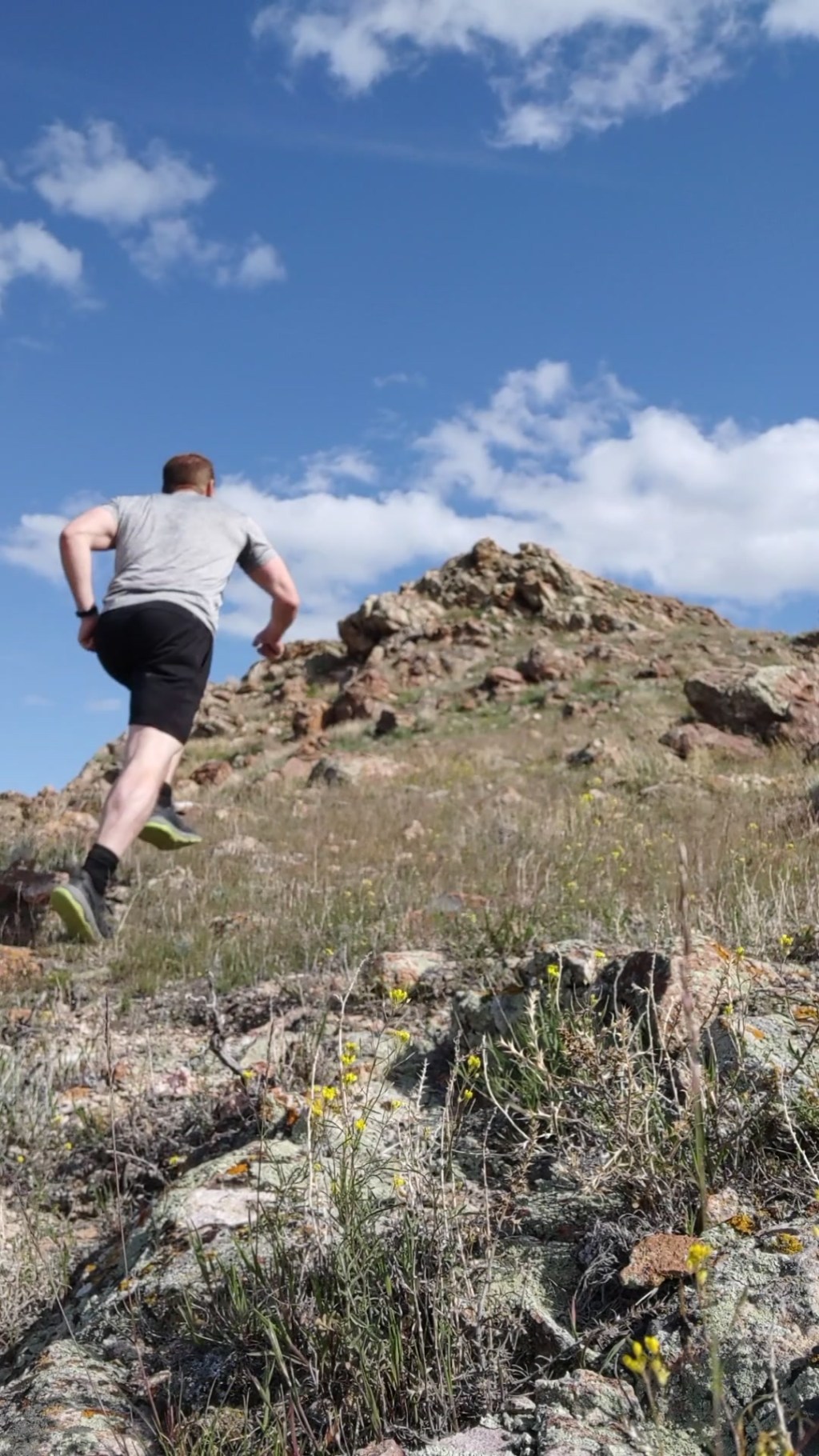
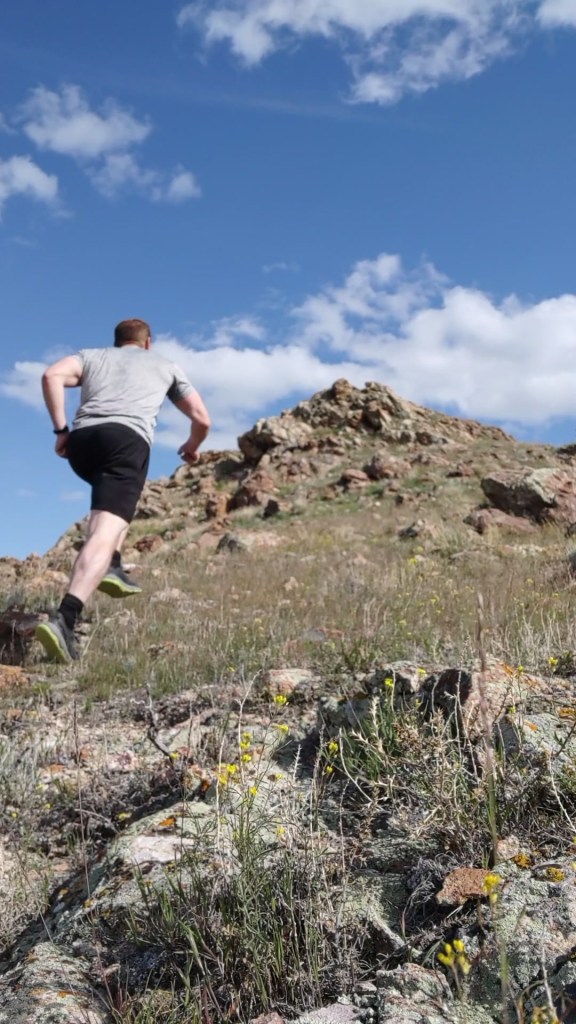
Running uphill is one of the toughest parts of trail running in the desert. It’s usually not a gradual hill in your path. You’ll be running along the desert floor and BAM! There’s a mountain in your way. Depending on how high of an incline it is, the sandy desert soil on the trail may be slippery, even when dry. Here are some tips for turning that mountain into a molehill!
1. Wear Proper Shoes
A good pair of trail running shoes are one of the best investments you can make for running out on the trails. Do your own research for your area to see what type of terrain you will be running on. And then look at the specs of different types of shoes,
A good rule of thumb is to look at the soil you will be running on. This will determine the type of tread you will want. You will want longer lugs that are more spaced out for mud and loose, rocky soils, and shorter, more closely spaced lugs with sticky rubber for harder compacted trails and running over rock that is typical along canyons, ridgelines and at higher elevations.
2. Pace
When running uphill, you want to pace yourself. You don’t want to attack the hill from the beginning. Trail running is inherently slower than road running. Not only does the terrain vary a lot more than pavement, but it is more slippery as well. You also have the occasional rocks and tree roots to contend with. You will want to go at a pace that is quite a bit slower than what you would normally run on a paved hill.
When I was deployed overseas, I conducted the 13.7 mile long Dancon Ruck March. I spent a little over 3 hours rucking alongside this group of four other soldiers who would run, pass me up and then slow way down. I would then pass them up while walking my normal pace. Eventually they started just barely catching up to me before they had to stop running and by the time the ruck was over, they were way behind me. The little bit of running that they did ended up costing them major energy expenditure. And in the long run, it didn’t help them get to the finish line any faster.
3. Shorten your Stride
When you are running uphill on a steep hill, you should slightly shorten your stride. Not only does this make it easier to move forward buts it’s also less taxing on your legs. Also you will want to make sure you’re not running on your toes. While this may seem natural, it will make your calf muscles tired out quickly. Try to keep as much of your foot on the ground as possible.
4. Lean Forward
While it’s important to lean forward, you want to make sure you’re not bending too far forward at your hips. This will put a lot of strain on your core, making it more difficult to breathe. Instead, lean in at your ankles, keeping your hips inline with your knees and ankles.
5. Use your Arms
Don’t forget to swing your arms naturally, just as you do when running on flat ground. Using an even more exaggerated swing while running uphill will give you even more momentum.
6. Go off Trail
In the Owyhee Mountains where I run, there are a lot of steep hills with loose, dry, sandy soil. This type of terrain can be extremely difficult to run on, and it makes slips more likely. Even with the right shoes and technique, it sometimes become necessary to play it safe and go off trail. Luckily, in the desert there usually won’t be a lot of tree stumps and other obstacles to get in your way, making it easier to run just to the side of the trail.
Have a great week and enjoy the trails!
 Owyhee Trail Fit